The report card had one verdict. The notebook in his drawer had a completely different one.
You've read the words so many times you could recite them. Easily distracted. Does not apply himself. Head in the clouds. And every time, you bite your lip, nod at the teacher, and walk back to the car wondering how they can spend six hours a day with your kid and come away with that.
Because you've seen the notebook. You've seen the half-finished thing on the workbench, the question that came out of nowhere at dinner, the look of complete absorption that never once appears in a classroom. That child and the child on the report card are not the same person. You know it. And right now, your child is starting to doubt it.
That gap — between what a grade says and what you know is true — is what I built Vic and the Yesterday Machine around.
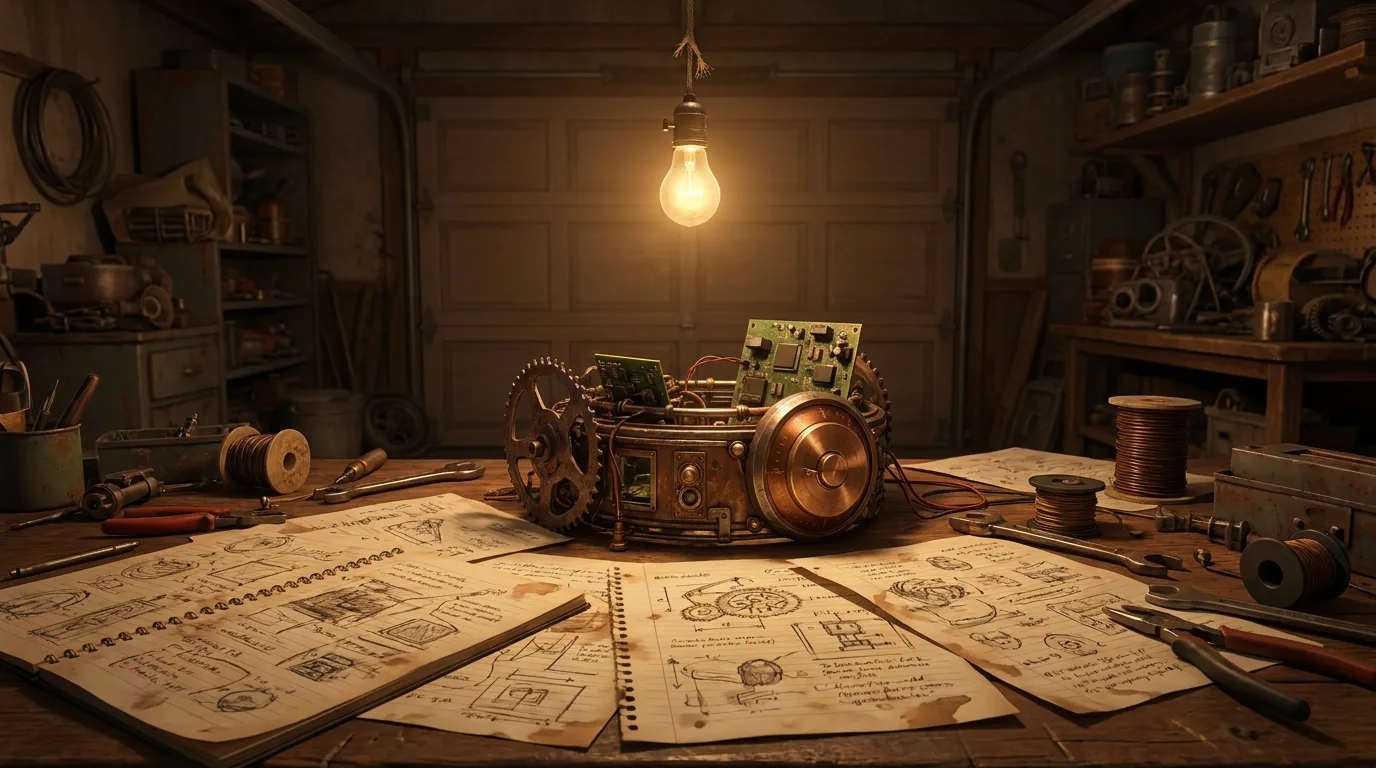
Vic is eleven. His report card says he doesn't apply himself. His garage says otherwise: bicycle gears, salvaged circuit boards, a microwave door, and a copper timing dial he tracked down from a salvage-yard keeper named Len. The machine he builds can loop the same day. And the story that follows is not really about time travel. It's about what happens when a kid tries to shortcut his way to the approval he thinks he needs — and what it costs him. Then what it looks like when he stops.
The book runs through every move a clever, overlooked kid tries: using borrowed answers to ace the test, keeping the real work secret, performing a version of himself he thinks others will accept. It shows, in plot rather than speech, why none of it works. And it shows what does.
Old way: praise the home projects and hope it transfers
Most of us try this. We say the right things. We make a fuss over the invention, the drawing, the strange contraption on the kitchen table. And for a moment it lands. But the child goes back to school Monday, gets the paper back with a C on it, and the praise from home shrinks. It doesn't stick because the child is not yet sure which verdict is real. The book doesn't tell Vic he's clever. It shows him finding the flaw in his own thinking, fixing it, and watching the evidence arrive. That's the difference between being told and knowing.
Somewhere behind his ribs, a small, fierce feeling glowed — the certainty that he was cleverer than any grade could measure.
Old way: the grade is the only proof that counts
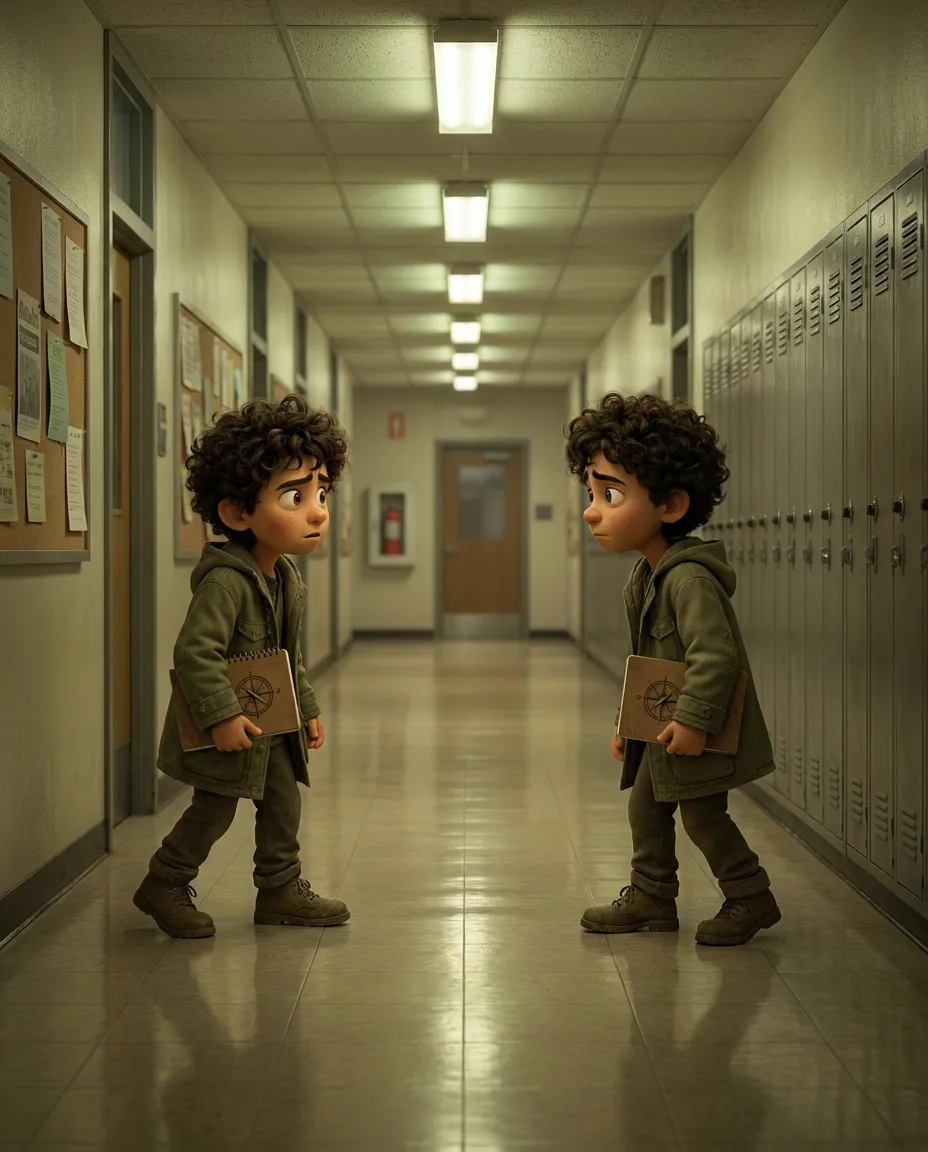
Vic gets a perfect score — properly perfect, every question right, teacher delighted, parents beaming. He comes home to warm looks and a good report. The book doesn't skip past this moment. It sits in it, long enough for Vic to notice the hollow feeling underneath. Because the answers weren't his. They were yesterday's answers, borrowed back through a time machine. The achievement was real on paper and empty everywhere else. That's the argument the book makes about grades — not that they don't matter, but that they measure the wrong thing when the kid behind them is hiding.
Old way: a different kind of patience is just a soft way of saying slow down
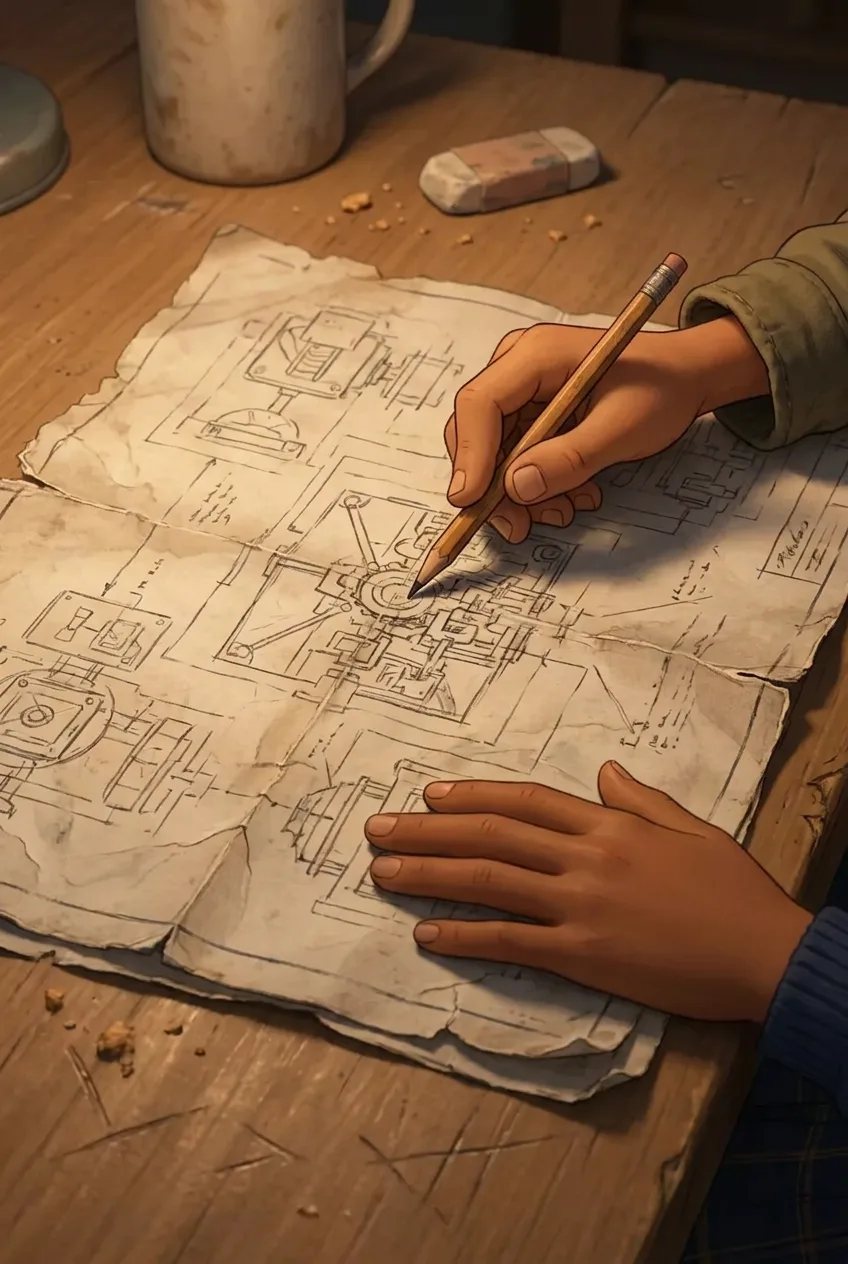
Priya finds the flaw in six months of Vic's schematics in under a minute. Not because she's smarter. Because she doesn't rush. Her two words to Vic — 'You rush. I don't.' — are the only piece of direct feedback in the whole book, and they land because she's earned them. Collaboration and a slower eye can solve what solitary late-night work cannot. The book argues that knowing when to let someone else look is not a weakness. It is the move that finally makes the machine work.
You rush. I don't.
Old way: the lesson should come from a speech, a teacher, a parent
No character in this book delivers a moral. Len the salvage-yard keeper gets closest, and he says it sideways: 'Some parts find the right hands. And some hands find out what they're for.' The lesson in the book is not handed to Vic. He arrives at it himself, sitting on a cold garage floor, taking the machine apart piece by piece, not in anger but slowly, the way you dismantle something you still love. When he writes his own report card at the end, four points in his own handwriting, your child will feel it because Vic earned every word of it.
Some parts find the right hands. And some hands find out what they're for.
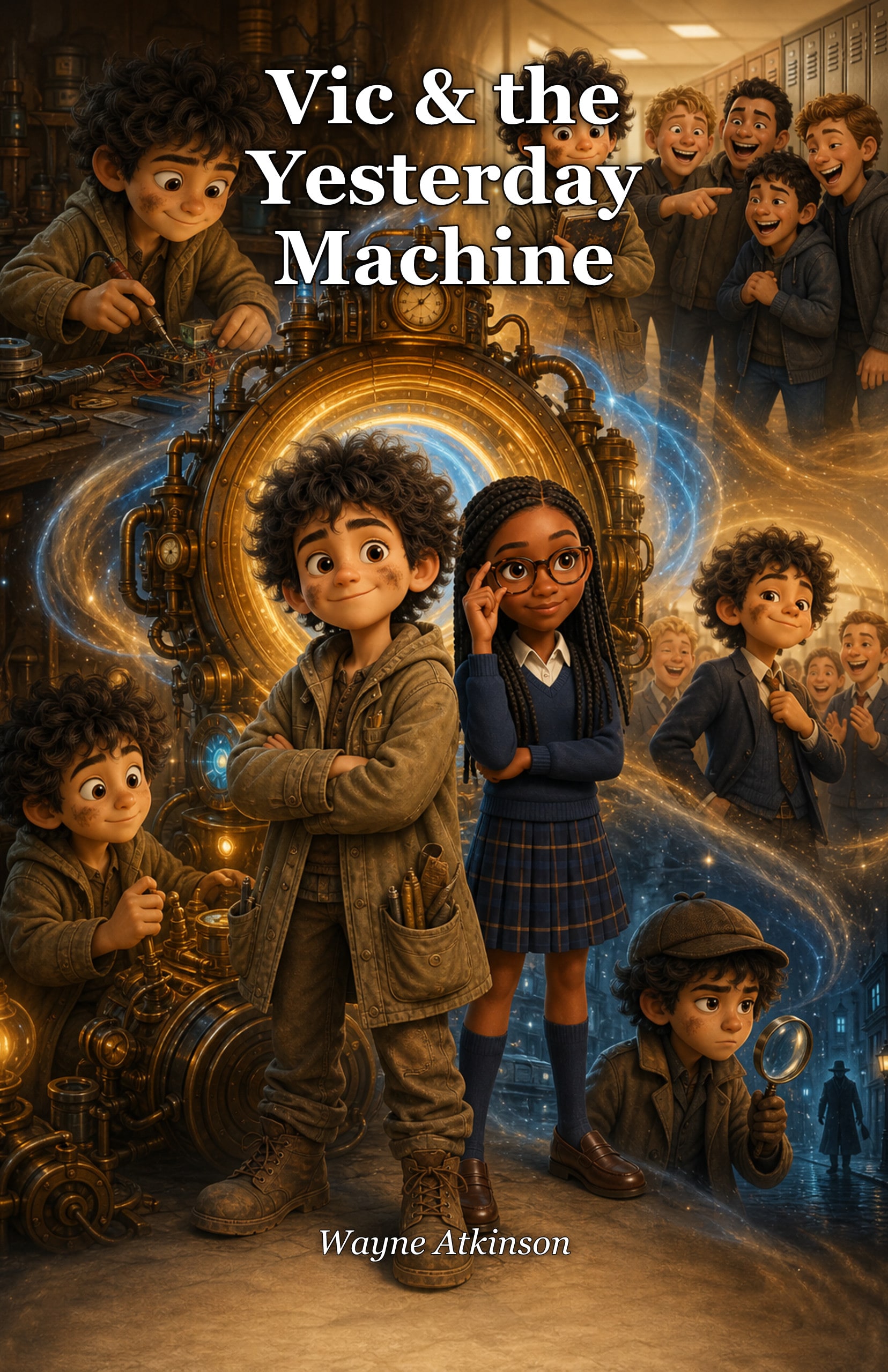
Vic and the Yesterday Machine is a novel for readers aged 8 to 12, written in short chapters that move fast enough for a kid who gets bored, and honest enough to feel like something real. The machine is genuinely built, the friendship is genuinely tested, and the ending is earned rather than handed out.
If you have a child who stopped sharing their ideas at school, who gets Cs and builds things you couldn't build in a month, who just needs to read something where the kid like them actually wins — this is that book.
See what it costs on Amazon and read the first pages there.
Find It on AmazonQuestions people actually ask
My child doesn't really read for pleasure. Will this just sit on the shelf?
Vic is eleven pages old before he's already hiding things from his parents and outwitting a salvage-yard keeper. The chapters are short and the plot moves fast. That said, if your child genuinely resists all books right now, this one won't fix that. It's a story, not a reading programme. An honest answer is: try it, but set the expectation low and let them find it rather than presenting it as a solution.
Isn't this just a 'believe in yourself' book wearing an adventure costume?
The book specifically argues against belief without evidence. Vic runs three rigorous tests to confirm the machine actually works before he trusts it. Believing in yourself turns out to be insufficient. You also need Priya, patience, and honesty. The message is built into the plot, not delivered in a speech. If it were a believe-in-yourself book, it would end at the first perfect score. It doesn't.
My child is a girl. Will she see herself in this story?
Priya finds the flaw in six months of Vic's work in under a minute, names his core problem in four words, and writes the line that closes the book. She is not the sidekick. The story needs her more than it needs the time machine. Whether your daughter identifies with the builder or the diagnostician, she has a clear character who is neither decorative nor secondary.
Will this actually change how my child feels about school on Monday?
A book cannot fix a system. What it can do is give your child a character who carries the exact gap they carry — between what a grade says and what they know is true — and watch that character resolve it on his own terms. Whether that changes Monday morning depends on your child. The book makes the argument once, clearly, and then gets out of the way.
My child is into building and inventing. Is this too young or too simple for a kid who's already serious about making things?
The machine in the book is assembled from bicycle gears, a microwave door, salvaged circuit boards, and a copper timing dial. The plot includes a rigorous three-point validation test and a two-wire wiring flaw that causes all the contradictions. It is written for kids who already have grease on their hands. A child who has no interest in building at all will feel less of the pull — that is an honest limitation worth knowing.