The report card said his head was in the clouds. The notebook proved his head was somewhere far more interesting.
You know the walk. The slow one home, after school, when the thing in the bag is something you'd rather not hand over. I've been thinking about that walk for years. Not my own — though I've had it. The one a certain kind of kid takes: the one who got the marks back and knows they don't match.
His parents are proud of him. He can see it on their faces every morning. And every time he comes home with a C, or a 'does not apply himself,' or an 'easily distracted,' he gets a little quieter about the thing he's been building in the garage. Not because he stops believing in it. Because he starts to wonder if he's the only one who does.
That gap — between what a child makes and what a grade says he's worth — is the most honest thing I know how to write about. So I did.
The book is called Vic and the Yesterday Machine. It follows an eleven-year-old boy inventor whose report card is a disaster and whose notebook is full of schematics for things nobody asked him to build. He solves his grade problem the way any resourceful kid might: he builds a time machine in his garage and uses it to live the same day twice, getting every answer right.
He is, briefly, a pleasure to teach.
But the book is not really about the machine. It's about what happens when the borrowed answers start to contradict each other, and what Vic realises once he's taken the whole machine apart and decided to start over. This time as himself.
The book runs that experiment honestly. No moral delivered in a speech. No teacher who suddenly understands. Just a boy who figures something out the hard way, with help from a girl who finds his flaw in under a minute and a salvage-yard keeper who seems to know what Vic needs before he asks for it.
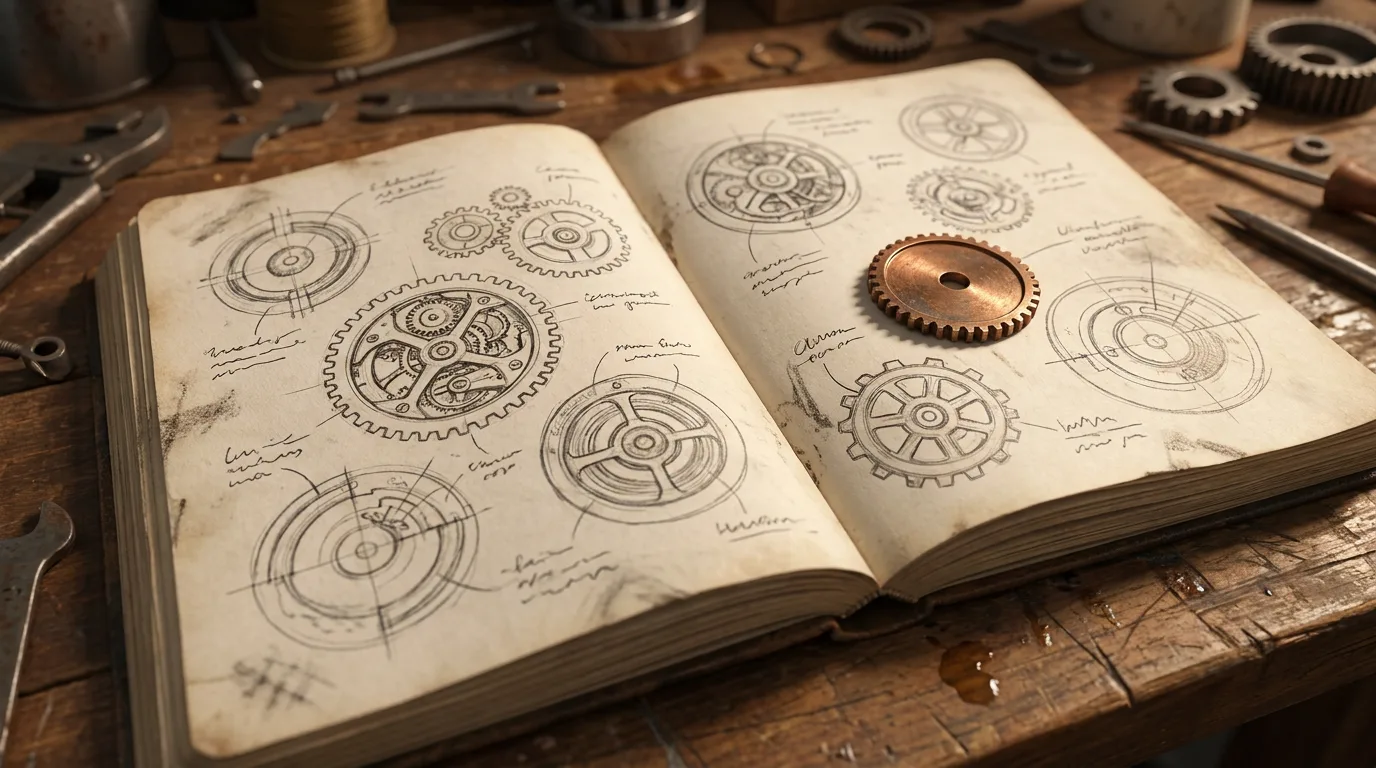
The grade and the notebook are measuring different things
Vic's report card says 'easily distracted, head in the clouds.' His notebook says stair-climbing bikes, weather helmets, and a time machine assembled from salvaged circuit boards and a microwave door. The book makes the gap visible and keeps it visible, all the way to the last page. A child who has felt that gap — who has watched the school verdict and the home verdict refuse to match — will recognise it immediately. Recognition is the whole point. The book argues, through plot rather than speech, that institutional judgment and actual potential are not the same measurement.
Somewhere behind his ribs, a small, fierce feeling glowed — the certainty that he was cleverer than any grade could measure.
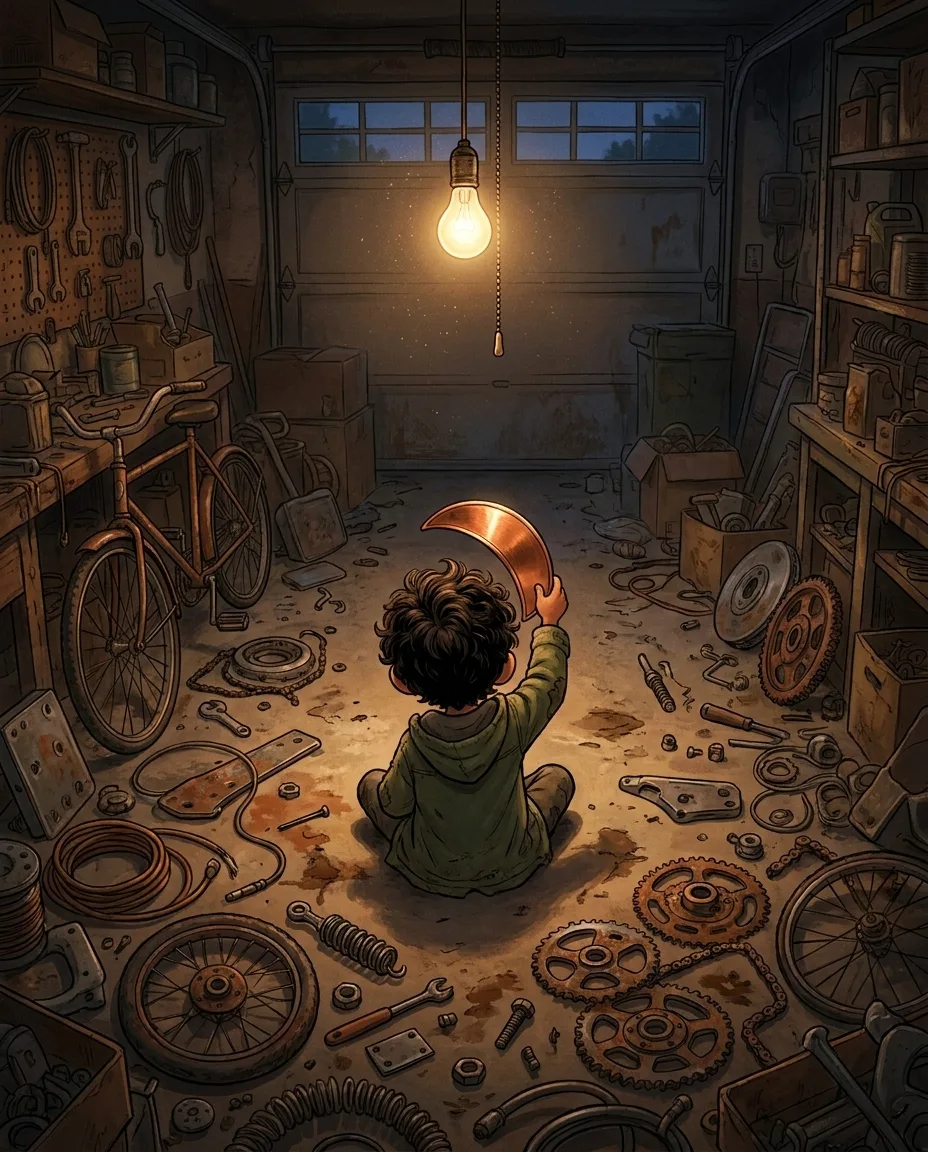
Shortcuts feel like solutions right up until they don't
Vic aces every test. His parents beam. He earns the words he always wanted from his teacher. And then, sitting with a warm report card in his hands, he notices the hollow feeling underneath it. The answers were right but they weren't his. The book doesn't punish him for cheating with a lecture. It just shows, quietly and accurately, that achievement borrowed from yesterday doesn't fill the space it was supposed to fill. That is a more honest argument than most adults make about grades, and kids feel the truth of it.
He hadn't been using the machine to be Vic. He'd been using it to be someone else. Someone clever without trying. Someone Marcus would clap for. Someone who never got a single thing wrong.
The flaw a second pair of eyes catches in sixty seconds
Priya sees Vic's schematics and finds the wiring error he had missed across hundreds of redrawings. Her verdict is four words: 'You rush. I don't.' The beat does two things at once. It shows that solitary genius has a ceiling, and it gives Vic — and the reader — a version of collaboration that isn't condescension. Priya doesn't fix the machine for him. She names the problem, and he goes back to work. 'Here was somebody who had looked at his strange, secret machine and, instead of mocking it, had made it better.' That is what honest partnership looks like.
You rush. I don't.
The real report card, written by the kid himself
At the end of the book, Vic writes his own four-point assessment on a clean notebook page. Keep going. Look for the pattern. Trust Priya. Be yourself. Priya adds a fifth line in her own handwriting. It closes the book. It also closes the argument the book has been making since page one: the real measure of a person is not what they get marked on but what they build and who they decide to be. That is the line a certain kind of child needs to read. Once, out loud, by themselves.
Also: the machine works. So does the boy.
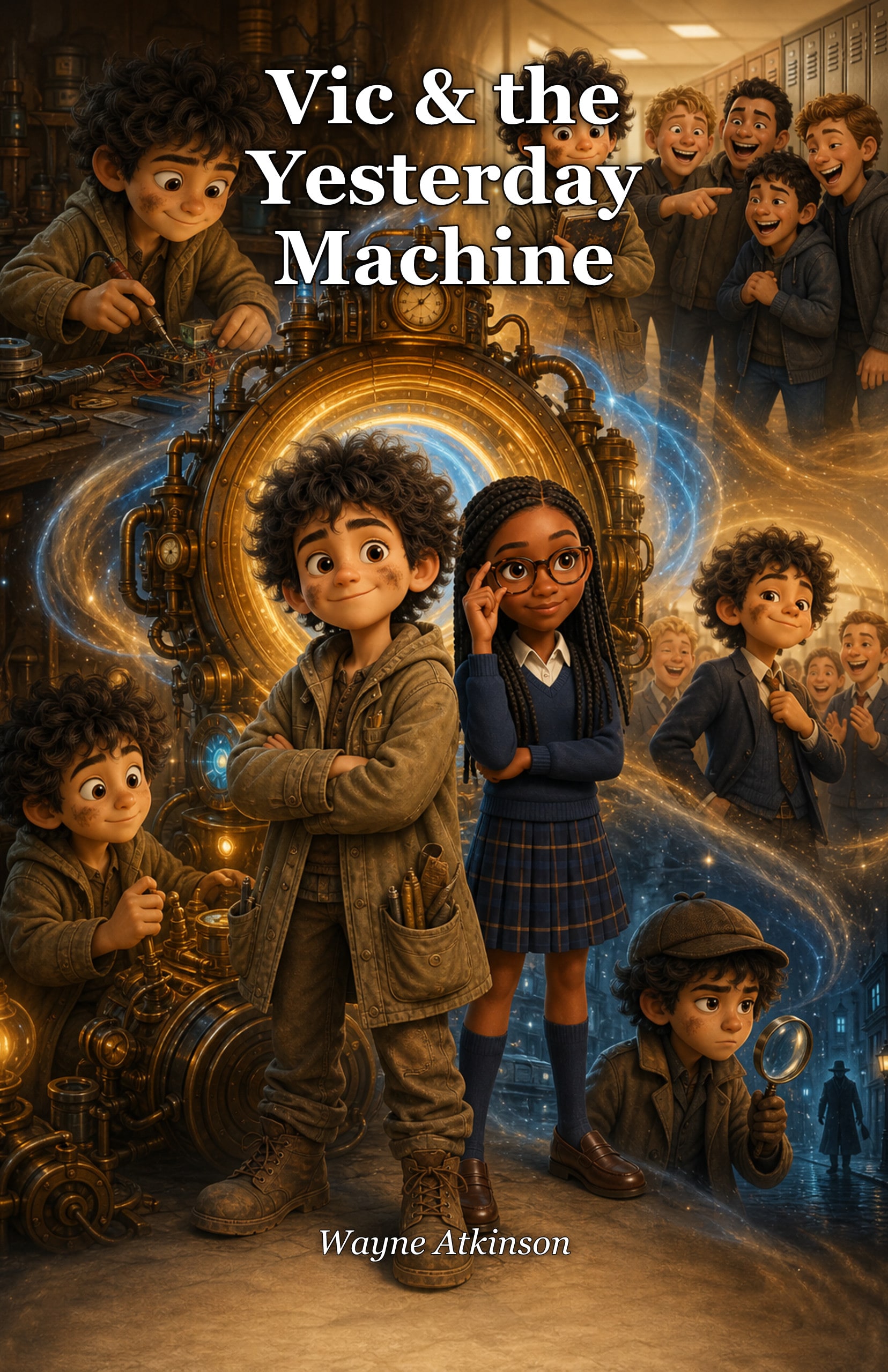
Vic and the Yesterday Machine is a novel for children aged roughly eight to twelve, and it is also, quietly, the book you hand a kid who has stopped sharing his ideas at school because he's decided nobody there wants to hear them.
It moves fast. The chapters are short. Vic is eleven pages old before he's already hiding things from his parents and outwitting a salvage-yard keeper. The plot does the persuading, so you don't have to.
See what it costs on Amazon, and judge it by the first chapter. If the kid with grease on his hands and a C in application doesn't see himself there, put it back.
Find It on AmazonQuestions people actually ask
My child doesn't read for pleasure. Will this sit on the shelf?
Honestly, it might. If your child resists all books right now, this one won't fix that. It's a story, not a reading programme. What it has going for it: short chapters, a machine that actually does something dangerous, and a boy who meets a copy of himself in a corridor. That's a better chance than most. But a non-reader who genuinely doesn't want to read needs something this can't give them.
Isn't this just a 'believe in yourself' story dressed up as an adventure?
The book specifically argues against that. Vic runs three rigorous tests to prove the machine works before he trusts it. Belief without evidence turns out to be insufficient. By the end he also needs Priya, patience, and honesty. The message is earned through plot, not announced in a speech. There's a difference, and kids feel it.
My child is a girl. Will she see herself in this?
Priya is the one who finds the flaw in six months of Vic's work in under a minute, names his core problem in four words, and writes the line that closes the book. She is not a sidekick. The story needs her more than it needs the time machine. A girl who builds things and gets tired of being underestimated will find her.
Will this actually change how my child feels about school?
A book cannot fix a system. What it can do is give your child a character who carries the same gap they carry, between what a grade says and what they know is true, and watch that character resolve it on his own terms. Whether that changes Monday morning depends on your child. The book makes the argument once, clearly, and then gets out of the way.
Is this aimed at parents, or will my child actually enjoy it?
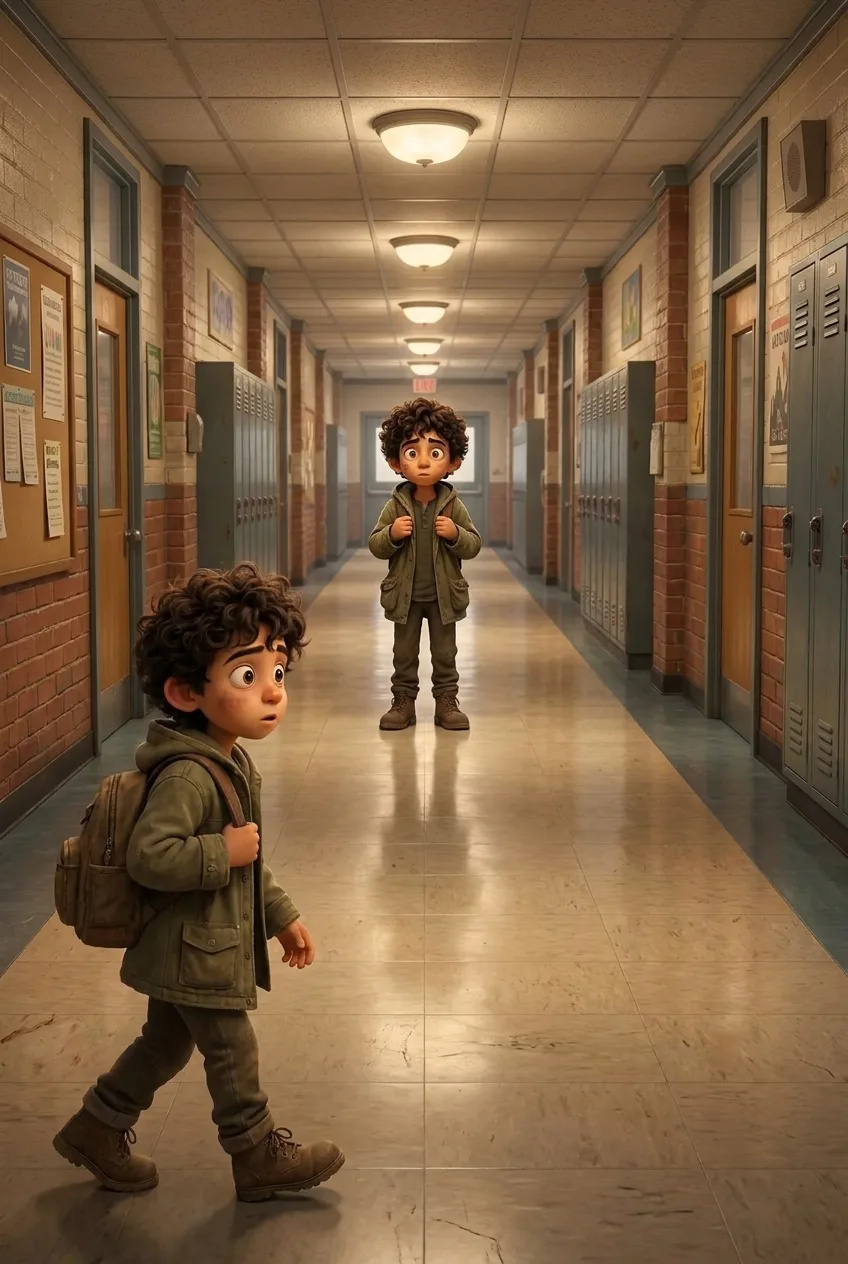
The ethics are hidden inside a boy who watches a thief twice without being seen and comes face to face with an earlier version of himself in a school corridor. No character delivers a moral. The lesson emerges from what happens, not from what anyone says about it. That said, a child with no interest in building or inventing will feel less of the pull. It's written for kids who already have grease on their hands.