The report card said his head was in the clouds. His notebook proved it was somewhere far more interesting.
There was a kid I kept thinking about. Not a real kid, exactly. A composite. The one who builds something genuinely impressive on a Saturday and then brings home a report card on Monday that says 'does not apply himself.' The one whose teacher is kind, well-meaning, and still completely wrong about him.
I wanted to write the book that kid would actually read. Not the one with a speech at the end where an adult tells him he was special all along. Not the one where believing in yourself is the whole mechanism. Something with grease and gears and a problem that gets worse before it gets better. Something where the clever thing turns out to be honesty, not a shortcut.
So I wrote Vic and the Yesterday Machine. Vic is eleven, his report card is a disaster, and his garage notebook is full of schematics for things that probably shouldn't work. When he builds a time machine from bicycle gears, salvaged circuit boards and a copper timing dial, it does work. Which should be the answer to everything. It isn't.
Vic uses the machine the way any of us would at first: to get the answers right, to earn the applause, to close the gap between who he is and who the grade says he should be. And the book is honest about what happens next. Not in a preachy way. In a 'he meets a copy of himself in the corridor and the whole thing unravels in front of the school assembly' way.
The machine is not the point. Vic is. And the question the book keeps asking is the one I think a lot of kids with grease on their hands are already carrying: what if the problem isn't me?
The gap between what a grade measures and what a kid can build
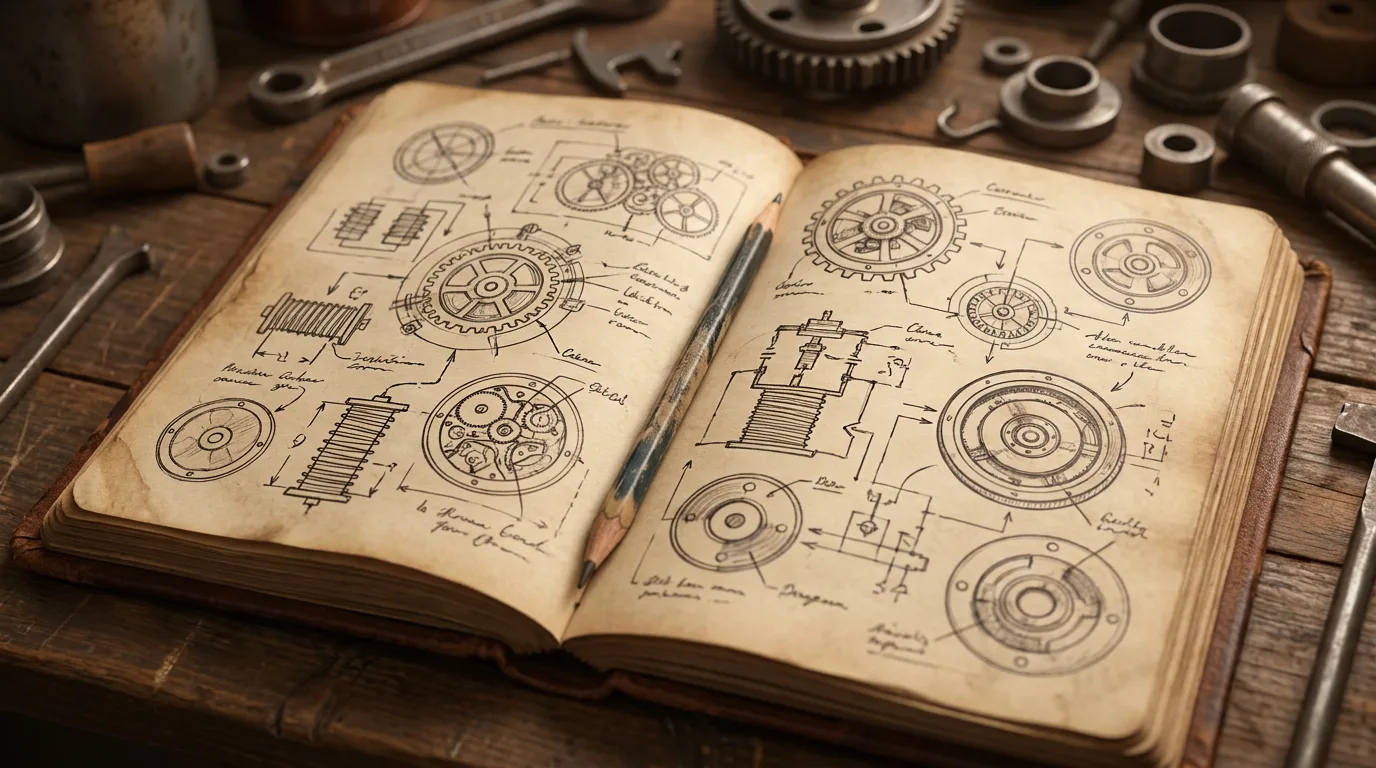
The book opens with that gap named plainly. Vic's report card says easily distracted, head in the clouds. His notebook, stuffed with schematics for stair-climbing bikes and weather helmets, tells a completely different story. The tension between institutional verdict and actual potential is the engine of everything that follows. If your child has felt that gap, they will feel it here too, in the first eleven pages, before a single time-travel beat lands.
Somewhere behind his ribs, a small, fierce feeling glowed — the certainty that he was cleverer than any grade could measure.
Why shortcuts feel like winning and cost more than they save
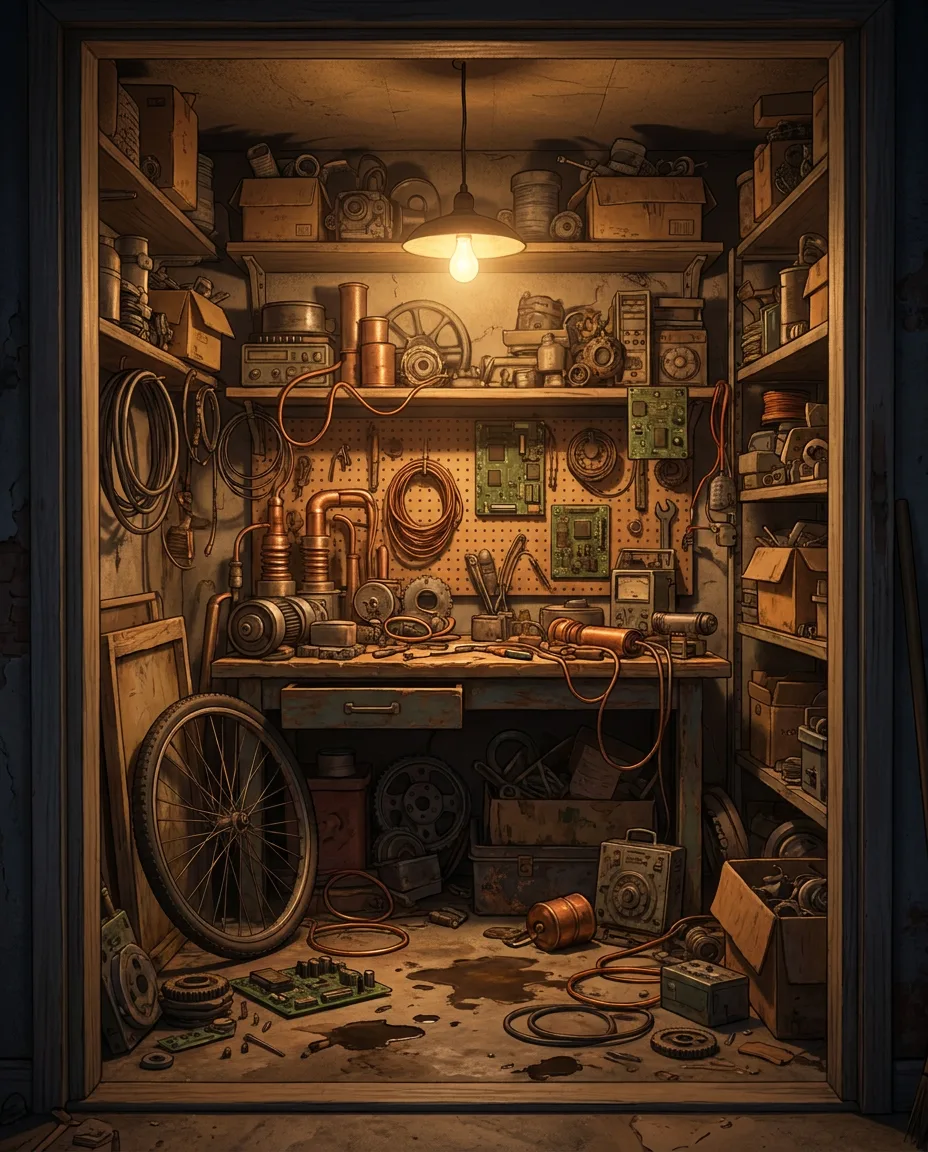
Vic uses yesterday's knowledge to ace every question. His parents beam. His teacher writes 'a pleasure to teach.' And the book is specific about what that feels like: not triumphant. Hollow. The warm report card sits on top of a hidden, cold gap because the answers were not truly his. This is not a moral delivered in a speech. It is a feeling the plot puts the reader inside, so they carry it out the other side.
He hadn't been using the machine to be Vic. He'd been using it to be someone else. Someone clever without trying. Someone Marcus would clap for.
What collaboration can solve that solitary genius cannot
Priya is not a sidekick. When she sees Vic's schematics, she finds the flaw he missed across hundreds of redrawings in under a minute. Her explanation is four words: 'You rush. I don't.' The book argues that the right partner does not make you less capable. It makes the thing you are building actually work. For kids who have been told their way of thinking is the problem, watching Vic learn this is not a lesson. It is a relief.
Here was somebody who had looked at his strange, secret machine and, instead of mocking it, had made it better.
The moment he decides to try again as himself
Vic dismantles the Yesterday Machine piece by piece, not in anger but quietly, deliberately, in an empty garage. He names what went wrong: he was using the machine to be someone else, someone whose worth was measured in applause and correct answers. Then he puts the parts back on the workbench and resolves to rebuild it his way. That scene is the centre of the book. Everything before it is the tangle. Everything after is what happens when a kid stops performing and starts building.
Outside, the day was ending. Inside the garage, quietly and stubbornly, a boy was deciding to try again — this time as himself.
The real report card, written in a notebook
At the end, Vic writes his own four-point report on a clean page. Keep going. Look for the pattern. Trust Priya. Be yourself. Priya adds a fifth line in her neat handwriting. The book's thesis, restated as the ending, is that the real measure of a person is not a grade. It is what they build and who they become. That is the line I hope a kid reads and then, quietly, writes something of their own.
Also: the machine works. So does the boy.
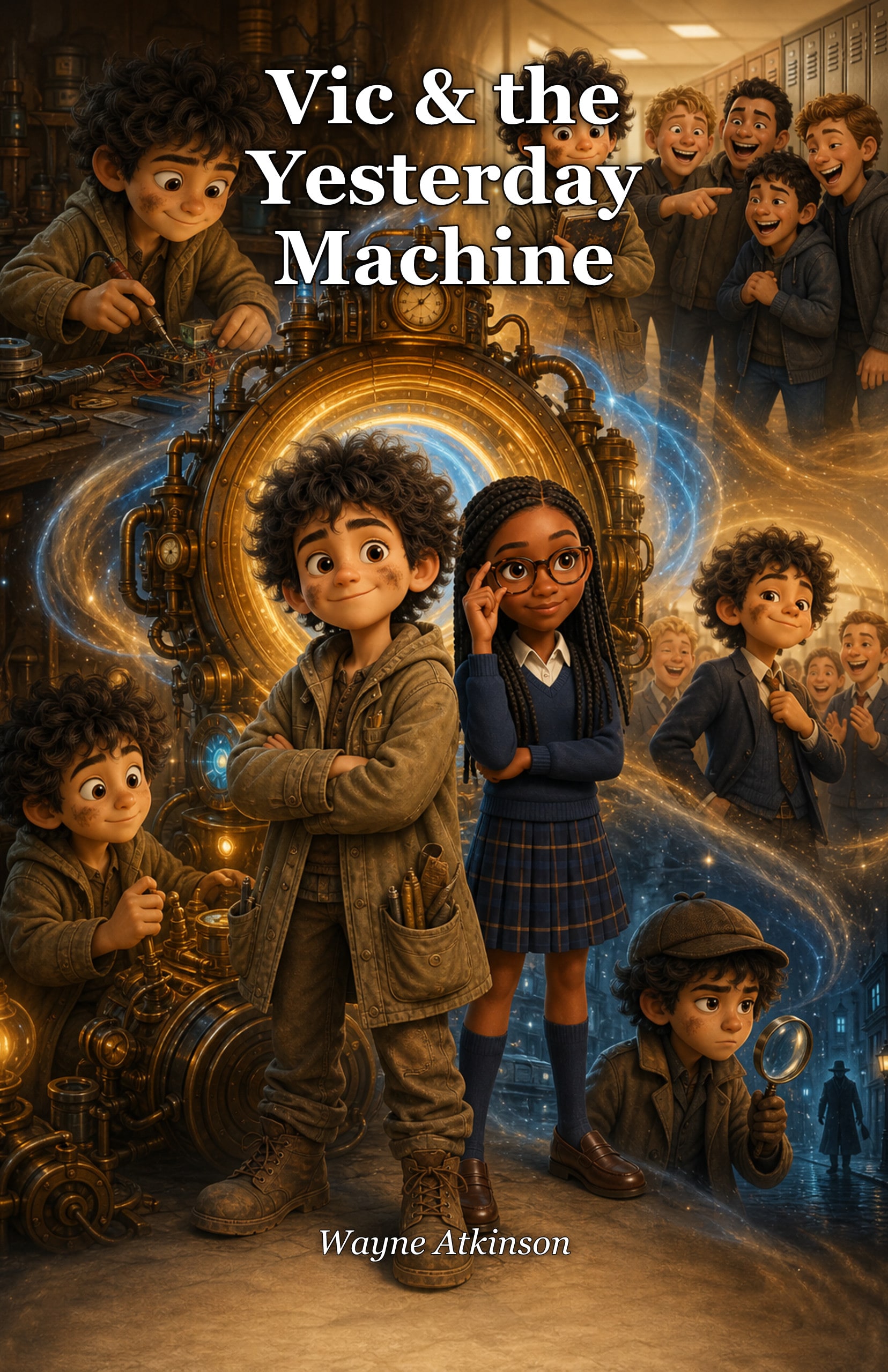
Vic and the Yesterday Machine is a middle-grade adventure for readers aged 8 to 12. The chapters are short and the plot moves fast. Vic is hiding things from his parents by page eleven and the machine is running by the end of the first act.
If you have a child who builds things at home and brings home a report card that feels like a verdict on the wrong person, this is the book I wrote for them. Not to fix anything. To show them that someone else has carried that gap, figured out what it actually means, and come out the other side still themselves.
See what it costs on Amazon and decide from there.
Find It on AmazonQuestions people actually ask
My child doesn't really read for pleasure. Will this just sit on the shelf?
Vic is hiding things from his parents and outwitting a salvage-yard keeper before the first act is over. The chapters are short, the machine is real, and the plot moves fast enough for a kid who usually gets bored. But honestly: if your child is resisting all books right now, this one won't fix that. It's a story, not a reading programme. Worth trying; not a guarantee.
Isn't this just a 'believe in yourself' book dressed up as an adventure?
The book specifically argues against that. Vic runs three rigorous tests to prove the machine actually works before he trusts it, because belief without evidence is not enough. The message is earned through plot. And believing in yourself turns out to be insufficient on its own. You also need Priya, patience, and honesty. The book is more complicated than a motto.
My child is a girl. Will she see herself in it?
Priya finds the flaw in six months of Vic's work in under a minute, names his core problem in four words, and writes the line that closes the book. She is not a sidekick. The story needs her more than it needs the time machine. A girl who has ever been told she is too quiet or too careful will recognise her immediately.
Will it actually change how my child feels about school?
A book cannot fix a system. What it can do is give your child a character who carries the same gap they carry — between what a grade says and what they know is true — and watch that character resolve it on his own terms. Whether that changes Monday morning depends on your child. The book makes the argument once, clearly, and then gets out of the way.
It sounds like it might be more for parents than kids. Will my child enjoy it or just tolerate a lesson?
The lesson is hidden inside a boy who meets a copy of himself in a corridor and watches a thief twice without being seen. No character delivers a moral. That said, a child with no interest in building or inventing will feel less of the pull. This book is written for kids who already have grease on their hands.