The report card said his head was in the clouds. His notebook proved it was somewhere far more interesting.
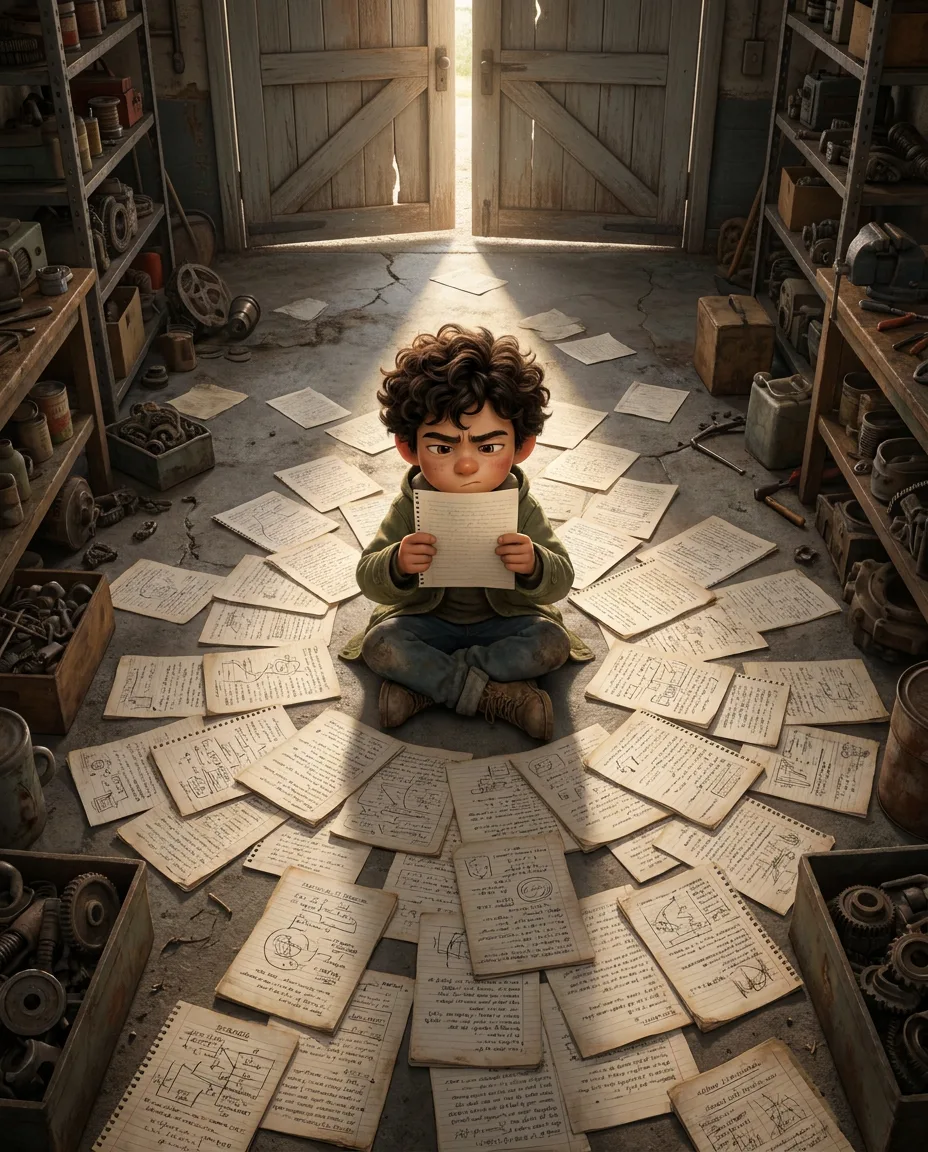
I used to wonder what kind of kid builds something nobody asked for, in a garage nobody visits, using parts that probably should have gone in the bin. The answer, I eventually figured out, is the kind of kid a report card cannot measure.
There's a line I've heard from parents more times than I can count: 'He stopped sharing his ideas at school. He just stopped.' That sentence stayed with me for a long time. Not because it's unusual. Because it isn't.
I wrote this book for that kid. The one with grease on his cheek and a notebook full of schematics for things that don't exist yet. The one whose teacher is kind, and patient, and still somehow misses the whole point of him.
The book is called Vic and the Yesterday Machine, and it opens with a boy whose report card is a small disaster and whose notebook is the opposite of that.
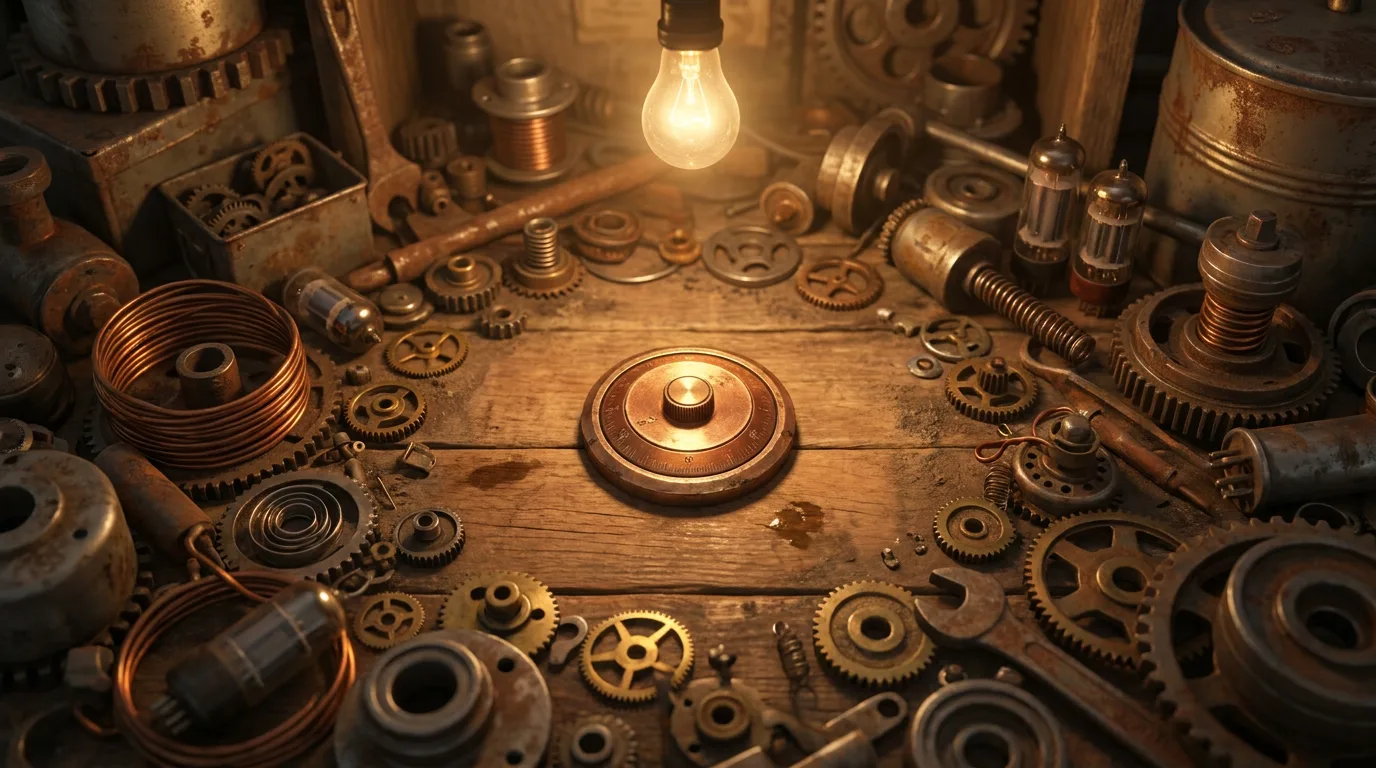
Vic builds a time machine in his garage. It's held together with bicycle gears, a microwave door, salvaged circuit boards, and one very specific copper timing dial he has to track down at a salvage yard on the edge of town. When he finds the part, the man behind the counter lifts it out before Vic even finishes describing what he needs. 'That one's been waiting,' is all he says.
The book doesn't stay in the garage. Vic uses the machine, and it goes wrong in ways he didn't predict, and the wrongness turns out to be the most important part. The adventure is real. So is what he learns from it. But I didn't want to write a book that ends with a speech about self-belief. I wanted to write one where the argument is made by the plot itself, and the kid arrives at the answer without being handed it.
"The report card said Vic's head was in the clouds. The notebook proved his head was somewhere far more interesting."
The gap between the grade and the notebook is the whole story
Vic's report card says: 'Easily distracted. Does not apply himself. Head in the clouds.' His notebook, on the same day, contains schematics for a stair-climbing bicycle and a weather helmet. The book establishes that gap in its first few pages and never lets go of it. For the child who already lives in that gap, reading it is something closer to relief than entertainment.
Somewhere behind his ribs, a small, fierce feeling glowed — the certainty that he was cleverer than any grade could measure.
Winning by cheating turns out to feel exactly like losing
When Vic uses the machine to loop the same day and ace every question, it works. His parents beam. His teacher writes 'a pleasure to teach.' And he feels hollow. The book doesn't moralize about it. It just shows what that hollow feeling actually is, in a way a kid can recognize. Getting the right answer for the wrong reason doesn't fill the gap. It makes the gap bigger.
Priya is not the sidekick. She's the solution he couldn't find alone.
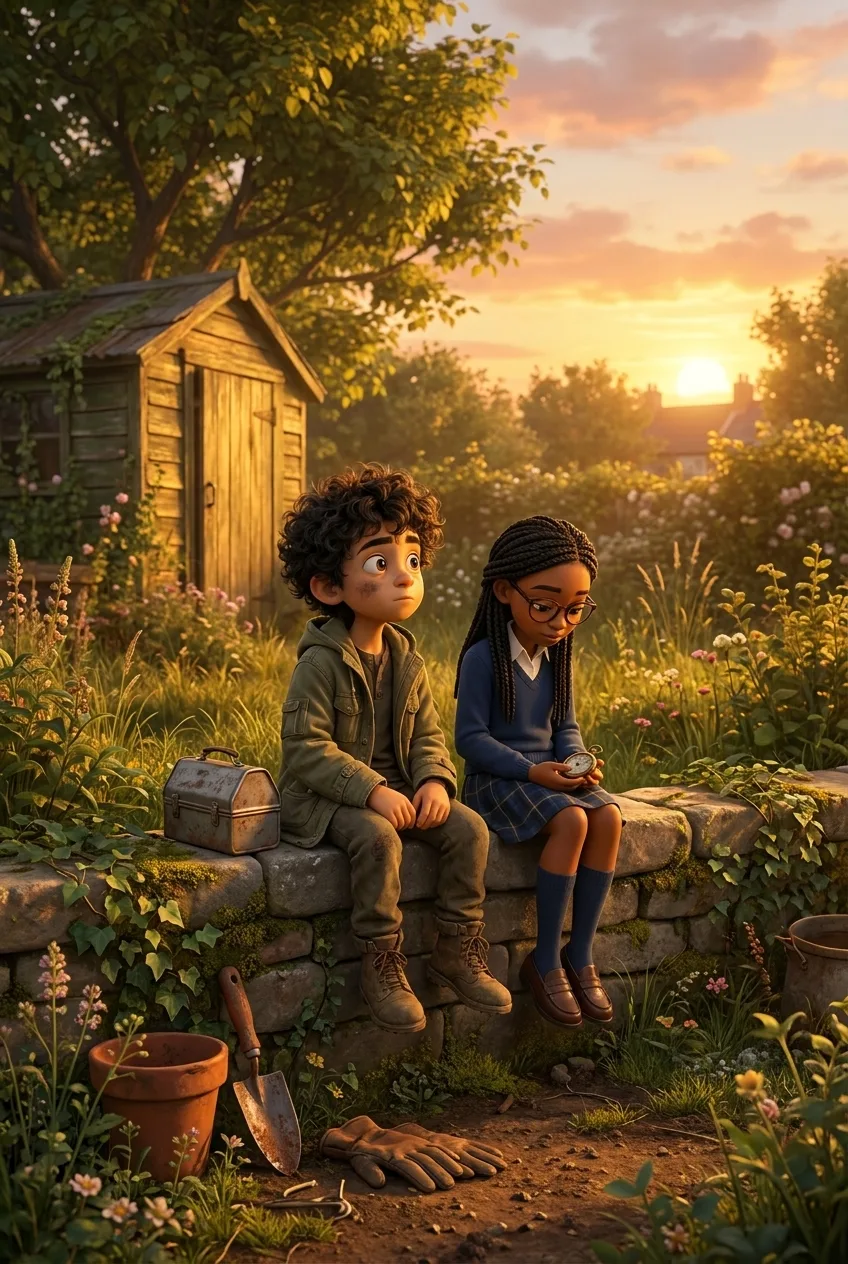
When Priya sees Vic's schematics, she finds the flaw he missed across hundreds of redraws. Her diagnosis is four words: 'You rush. I don't.' The book argues, through her, that the most original thinker in the room still needs someone who sees differently. Collaboration isn't a consolation prize for when solo genius fails. It's the thing that makes the machine actually work.
Here was somebody who had looked at his strange, secret machine and, instead of mocking it, had made it better.
The real report card fits on one notebook page
At the end of the book, Vic writes his own four-point report on a clean page. Keep going. Look for the pattern. Trust Priya. Be yourself. Priya adds a fifth line in her own handwriting. The school's report card is not mentioned. The book's thesis is that the real measure of a person is not a grade but what they build and who they become, and it earns that thesis by putting Vic through enough to mean it.
Also: the machine works. So does the boy.
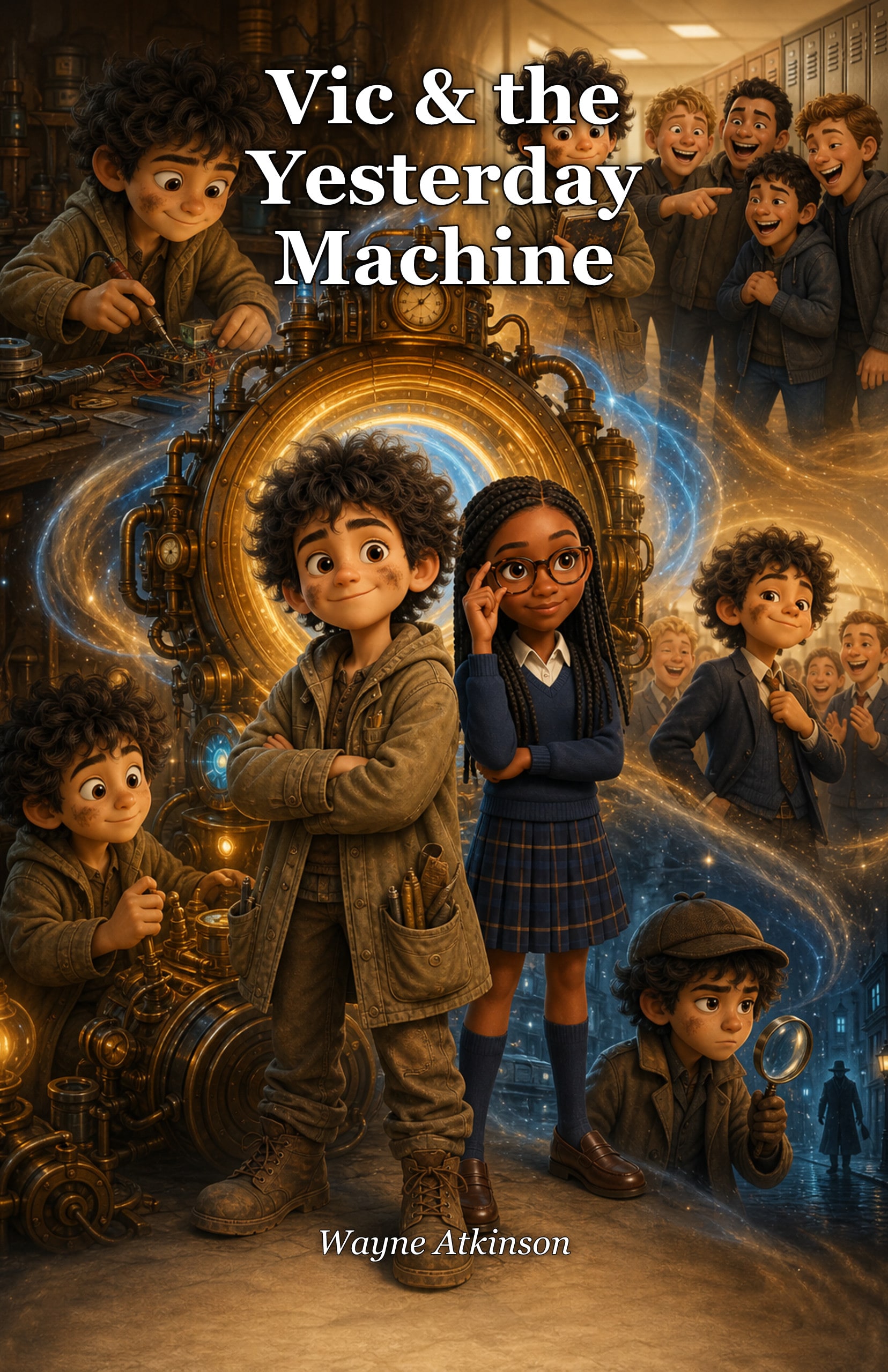
Vic and the Yesterday Machine is a chapter book for kids aged eight to twelve, written for the ones whose teachers mean well and still get them wrong.
The chapters are short. The plot moves fast. Vic is eleven pages old before he's already hiding things from his parents and outwitting a salvage-yard keeper. If your child is the kind who builds their own things and gets bored with kits, the pull is in the details: the bicycle gears, the microwave door, the copper dial that was apparently waiting for him.
There's no speech at the end about believing in yourself. There's a boy in a garage, taking a machine apart piece by piece, deciding to try again as himself. That's the whole argument. It lands or it doesn't, and in my experience with the kids who have read it so far, it lands.
See what it costs on Amazon.
Get It on AmazonQuestions people actually ask
My child doesn't really read for pleasure. Will this just sit on the shelf?
Honestly, it might. If your child is genuinely resistant to all books right now, this one is not a reading programme — it's a story. What I can say is that the chapters are short, the machine is built from real junk, and Vic meets a copy of himself in a corridor by chapter seven. Whether that's enough depends on your child, not on me.
Isn't this just a 'believe in yourself' book dressed up as an adventure?
The book specifically argues against belief without evidence. Vic runs three rigorous tests to confirm the machine actually works before he trusts it. And believing in yourself turns out to be insufficient: he also needs Priya, patience, and honesty. The message is earned through the plot, not delivered in a speech.
My child is a girl. Will she see herself in this, or is Priya just a sidekick?
Priya finds the flaw in six months of Vic's work in under a minute. She names his core problem in four words. She delivers the line that closes the book. The story needs her more than it needs the time machine. She is not a sidekick.
Will reading this actually change how my child feels about school?
A book cannot fix a system. What it can do is give your child a character who carries the same gap they carry, between what a grade says and what they know is true, and watch that character resolve it on his own terms. Whether that changes Monday morning depends on your child. The book makes the argument once, clearly, and then gets out of the way.
My child is into building and inventing. But what if they find the emotional stuff heavy?
The ethics are hidden inside the plot. No character sits down and explains the moral. What's on the surface is a boy who meets a copy of himself in a corridor, watches a thief from a hiding place, and has to decide whether to take the credit or let his friend do it. The feeling comes from the story. The lesson comes later, if at all.